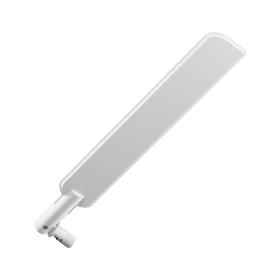
MikroTik KNOT LR8G IoT Gateway LoRa® LTE GPS RouterOS
The MikroTik KNOT LR8G kit is an industrial-grade multi-radio IoT gateway combining LoRa® (868 MHz), LTE CAT-M1/NB-IoT, concurrent GPS, Bluetooth 5.2, 2.4 GHz Wi-Fi (802.11b/g/n), RS485/Modbus, and dual 100 Mbps Ethernet with PoE-in and PoE-out — running full RouterOS v7 on a compact 122 × 87 × 26 mm platform at 6W idle consumption. Three power input options (DC jack 12–57V, 802.3af/at PoE-in, or 5V MicroUSB), DIN rail and wall mount hardware included, -40°C to +70°C operating range, 200,000-hour MTBF. **Canadian buyers: this is the 868 MHz LoRa® version — confirm LoRa® frequency band and LTE CAT-M1 band compatibility with Canadian carriers before ordering.**

We only offer IC Certified products. For international products, contact us.

Ship Charge Will Display As Free Until Ship Address / Location Is Provided To Calculate Ship Charge.
The MikroTik KNOT LR8G kit is the most connectivity-dense IoT gateway in MikroTik's current catalogue — a single compact device that simultaneously handles LoRa® sensor network aggregation, LTE CAT-M1/NB-IoT cellular backhaul, GPS asset tracking, Bluetooth 5.2 beacon detection, 2.4 GHz Wi-Fi, wired RS485/Modbus industrial sensor integration, and dual Ethernet with PoE output. For system integrators, industrial automation engineers, WISPs, and IoT platform operators who need a single gateway device to bridge multiple sensor and connectivity layers, the KNOT LR8G eliminates the need for separate LoRa® gateway, cellular router, and GPS tracker hardware — one device handles all three simultaneously.
The concurrent GPS and LTE CAT-M operation is a headline upgrade over previous IoT gateway designs. GPS location and LTE cellular backhaul run simultaneously without mode-switching — meaning a KNOT LR8G deployed on a moving asset (service vehicle, shipping container, refrigerated transport unit) continuously reports both real-time location via GPS and sensor/status data via LTE CAT-M1, without either function interrupting the other. For asset tracking, cold chain monitoring, and mobile field equipment management, this is a direct operational improvement over designs that require switching between GPS and cellular modes.
The LTE CAT-M1 and NB-IoT cellular interfaces are specifically designed for IoT deployments where full LTE data rates are unnecessary and where low per-device data costs are critical. CAT-M1 and NB-IoT SIM plans from Canadian carriers (Bell, Rogers, Telus) are significantly cheaper than standard LTE data plans — making the KNOT LR8G cost-effective for large-scale sensor deployments where hundreds or thousands of devices need cellular backhaul without per-device data costs becoming prohibitive.
The RS485/Modbus serial interface bridges the gap between legacy wired industrial sensors and modern IP-based IoT infrastructure. Industrial environments — manufacturing plants, cold chain facilities, agricultural operations, remote power infrastructure — frequently have deployed Modbus-based sensors and actuators that predate IP connectivity. The KNOT LR8G reads Modbus sensors natively over RS485, converts the data to Modbus TCP, and forwards it over MQTT or HTTPS via the LTE or Ethernet backhaul — without requiring a separate protocol converter or industrial PC.
The PoE-out on Ether2 (Passive PoE, 650 mA low voltage / 450 mA high voltage, 12W total) allows the KNOT LR8G to power a downstream device — a LoRa® node, a small access point, a Bluetooth gateway, or another PoE-in sensor — directly from the same Ethernet cable that carries data. For installations in remote enclosures or cabinets where minimising the number of power runs is important, this eliminates a separate power supply for the downstream device.
Three independent power inputs mean the KNOT LR8G adapts to virtually any installation power environment:
- **DC jack (12–57V):** Standard DC power from a wall adapter, solar charge controller, or battery bank
- **802.3af/at PoE-in (18–57V):** Powered directly from any standard PoE switch — no separate power run required
- **MicroUSB (5V):** Powered from a USB power bank, standard USB charger, or 5V supply — for temporary deployments, field testing, or sites with only USB power available
The included K-47 wall mount set and DIN rail mount set cover the two primary industrial installation scenarios — wall-mounted in a cabinet or enclosure, or DIN rail-mounted inside an industrial panel. The 24V 1.2A power adapter and USB OTG cable are included — the KNOT LR8G is ready to deploy out of the box.
RouterOS v7 (License 4) is the operating system — not a stripped-down IoT firmware but full RouterOS with MPLS, BGP, OSPF, custom scripting via the RouterOS scripting engine, MQTT client, and the full MikroTik feature set. This means the KNOT LR8G is not just an IoT gateway — it is also a capable router and network management device. For remote sites where a single device must handle both IoT connectivity and network routing, the KNOT LR8G eliminates a separate router deployment. Software updates are included for the life of the product, guaranteed minimum 5 years from purchase.
The -40°C to +70°C operating temperature range is the widest in this product batch — rated for Canadian winter conditions inside a weatherproof enclosure. The 200,000-hour MTBF (approximately 22.8 years at 25°C) is the highest MTBF published in this product batch — industrial-grade reliability for long-term unattended deployments.
**⚠️ Important — LoRa® frequency advisory for Canadian buyers:** The KNOT LR8G kit uses the R11e-LR8 LoRa® radio card operating in the **868 MHz band (863–870 MHz)** — the European and international LoRa® standard. Canadian LoRa® IoT networks operate in the **915 MHz band (902–928 MHz)** under ISED regulations. The KNOT LR8G's LoRa® radio is **not frequency-compatible with Canadian domestic LoRa® networks** as shipped. Contact your MikroTik distributor to confirm whether a 915 MHz LoRa® variant is available for Canadian deployments, or whether this device is intended for a non-Canadian LoRa® frequency environment.
**⚠️ Important — LTE band advisory for Canadian buyers:** LTE CAT-M1 and NB-IoT band support must be confirmed for Canadian carriers (Bell, Rogers, Telus) before deployment. Canadian carriers operate CAT-M1 and NB-IoT on specific LTE bands. Confirm the BG770A modem's supported band list against your target carrier's CAT-M1/NB-IoT band deployment before ordering.
Key specifications:
- **LoRa®:** 868 MHz band (863–870 MHz) — R11e-LR8 card, SMA female connector
- **LTE:** CAT-M1 and NB-IoT — BG770A modem, Nano SIM slot (SIM not included), SMA female connector
- **GPS/GNSS:** Concurrent with LTE CAT-M, SMA female connector
- **Bluetooth:** 5.2, uUFL connector (external antenna optional)
- **Wi-Fi:** 2.4 GHz 802.11b/g/n, Wi-Fi 4, 300 Mbps max, 1.5 dBi internal antenna, 2-chain
- **Ethernet:** 2× 10/100 Mbps — Ether1 (data), Ether2 (data + PoE-out)
- **PoE-in:** 802.3af/at, 18–57V input
- **PoE-out:** Passive PoE on Ether2, 650 mA (low voltage) / 450 mA (high voltage), 12W total
- **Serial:** RS485/Modbus
- **Power inputs:** DC jack 12–57V, PoE-in 18–57V, MicroUSB 5V
- **Max power consumption:** 23W (with attachments), 6W (idle)
- **CPU:** QCA9531 @ 650 MHz (MIPSBE), 1 core
- **RAM:** 64 MB
- **Storage:** 128 MB NAND
- **OS:** RouterOS v7, License 4
- **Dimensions:** 122 × 87 × 26 mm
- **Operating temperature:** -40°C to +70°C
- **MTBF:** ~200,000 hours at 25°C
- **IP rating:** IP20 (indoor/enclosed installation only)
- **Certifications:** CE, EAC, RoHS — no FCC, no IC published
- **Included:** 24V 1.2A power adapter, K-47 wall mount set, DIN rail mount set, USB OTG cable
- **Product code:** RB924iR-2nD-BT5&BG770A&R11e-LR8G
Note: SIM card not included. LTE CAT-M1/NB-IoT service requires a compatible SIM from a supported carrier. LoRa® operation requires a LoRa® network server or The Things Network (TTN) infrastructure. RouterOS licence is pre-installed — no additional purchase required.

- Product code
- RB924iR-2nD-BT5&BG770A&R11e-LR8G
- Architecture
- MIPSBE
- CPU
- QCA9531
- CPU core count
- 1
- CPU nominal frequency
- 650 MHz
- Switch chip model
- QCA9531
- RouterOS License
- 4
- Operating System
- RouterOS
- Size of RAM
- 64 MB
- Storage size
- 128 MB
- Storage type
- NAND
- MTBF
- Approximately 200'000 hours at 25C
- Tested ambient temperature
- -40°C to 70°C
- Number of DC inputs
- 3 (DC jack, PoE-IN, MicroUSB)
- DC jack input Voltage
- 12-57 V
- Max Power consumption
- 23 W
- Max power consumption without attachments
- 5 W
- Cooling type
- Passive
- PoE in
- 802.3af/at
- PoE in input Voltage
- 18-57 V
- PoE out ports
- Ether2
- PoE out
- 802.3af/at
- Max out per port output - input (less than 30 V)
- 650 mA
- Max out per port output (input more than 30 V)
- 450 mA
- 10/100 Ethernet ports
- 2
- Number of SIM slots
- 1 Modem (Nano SIM)
- Serial port
- RS485
- Number of USB ports
- 1
- Max USB current (A)
- 1
- Voltage Monitor
- Yes
- PCB temperature monitor
- Yes
- Wireless 2.4 GHz Max data rate
- 300 Mbit/s
- Wireless 2.4 GHz number of chains
- 2
- Wireless 2.4 GHz standards
- 802.11b/g/n
- Antenna gain dBi for 2.4 GHz
- 1.5
- Wireless 2.4 GHz chip model
- QCA9531
- MicroUSB input Voltage
- 5v
- MiniPCI-e slots
- 1
- Wireless 2.4 GHz generation
- Wi-Fi 4
- Certification
- CE, EAC, ROHS
- Bluetooth version
- 5.2
- Bluetooth RF connector type
- uUFL
- IP
- 20